How It Works
Subfloor Preparation:
The concrete slab must be clean, flat, and dry. An applied liquid moisture barrier or epoxy vapor retarder is applied over the concrete to seal against slab dampness.
Adhesive Application:
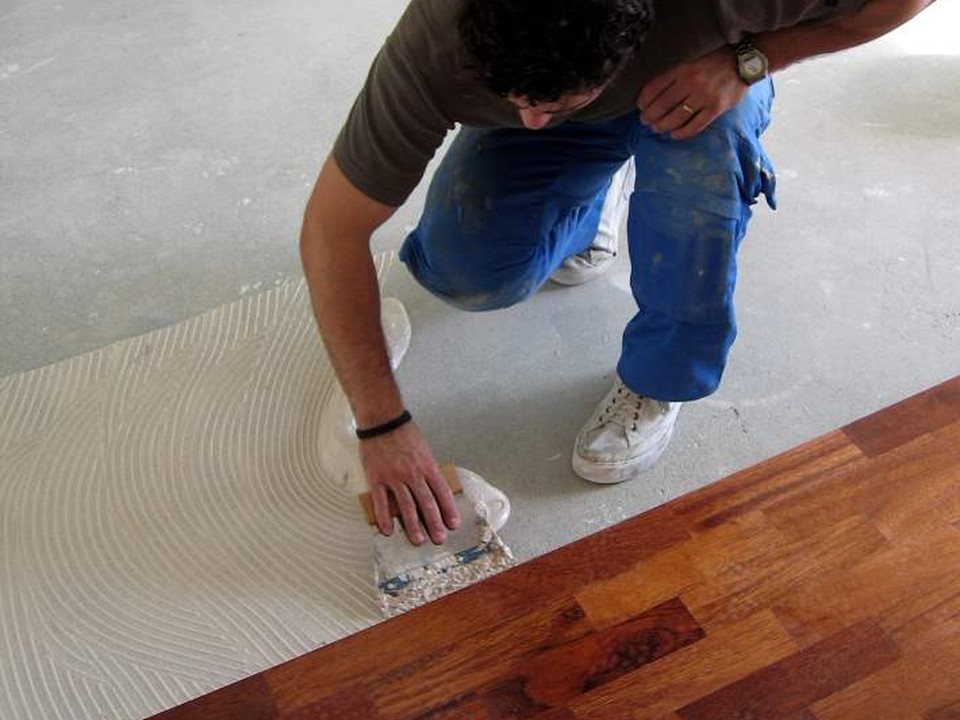
A flexible, full-coverage polyurethane or silane-modified polymer adhesive is combed evenly onto the subfloor using a notched trowel.
Flooring Laying:
Boards are pressed firmly directly into the wet adhesive bed, engaging the tongue-and-groove joints tightly together.
Key Advantages
Minimal Profile Height:
Adds only the thickness of the floorboard plus adhesive (approx. 14mm–19mm total build height), making it ideal for low-threshold doorways and renovations.
Solid Acoustic Feel:
Direct bonding eliminates air pockets beneath the floor, producing a solid, quiet underfoot feel with reduced footstep hollow sound.
Energy Efficient:
Provides optimal thermal conductivity for subfloor heating systems compared to raised structural frameworks.
Seamless Transitions:
Facilitates clean, flush joins with adjacent floor finishes like tiles or carpets without high step-downs.
Note: Concrete subfloors must meet strict moisture content tolerances and surface flatness requirements prior to direct stick application.